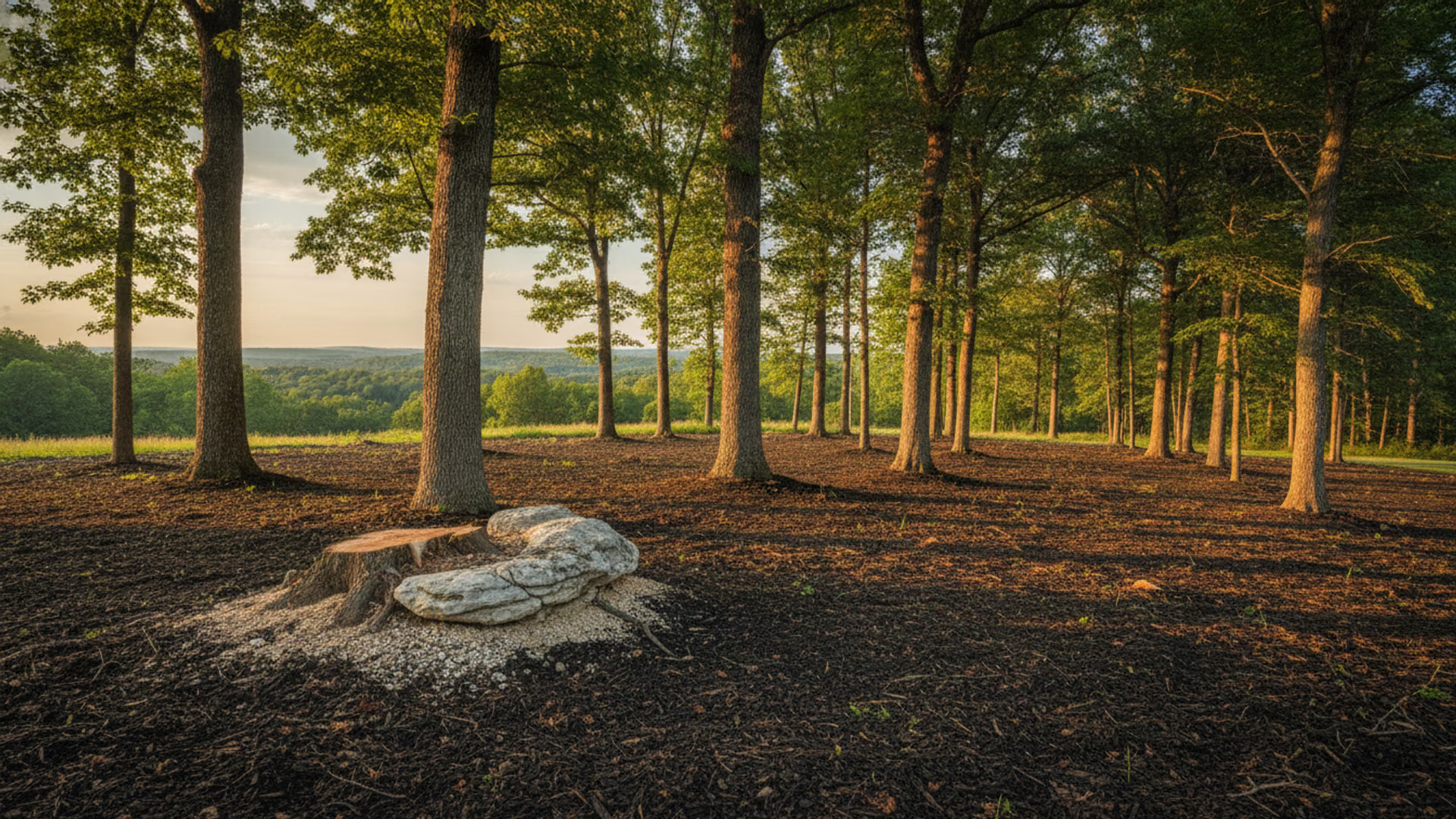
The back corner of your lot has gone to brush and volunteer trees until you can't walk it — or the acreage you just bought outside town turned out to be half cedar thicket instead of the woods in the listing photos. Either way, what you need is land clearing in Springfield, MO, and you probably don't need a bulldozer. We clear trees, brush, and stumps — felled, chipped, ground below grade, and hauled — for residential and commercial properties across Springfield, Greene County, and everything within about 30 miles, as part of the full tree service lineup at SGF Tree Removal. Call (417) 742-8635 or Get a Free Estimate; every job starts with a free on-site walk-through, because nobody can price a thicket from the road.
Lot Clearing, Acreage Clearing, or Selective Clearing?
"Land clearing" covers three different jobs, and knowing which one you're pricing matters more than any per-acre number.
Residential lot clearing
Lot clearing in Springfield, MO is in-town and suburban work: an overgrown corner, volunteer trees coming up through the fence line, a brushy half-acre that needs to become lawn, garden beds, or the footprint for a shop or an addition. These jobs are quoted per job, not per acre — a quarter-acre honeysuckle tangle can hold more work than two acres of open scrub.
Acreage and building-site clearing
On the 1-to-10-acre parcels changing hands along Springfield's growth ring, clearing means opening a driveway corridor, a building envelope, or a pasture edge. This is clearing trees for construction: a defined, stump-free zone where the house and outbuildings will sit, with the rest of the ground left standing.
Selective clearing
On Ozarks ground, selective clearing is usually the right answer. A scraped-bare site is what an excavation contractor sells, and it's rarely what the owner of wooded acreage actually wants. A tree crew works stem by stem: the cedar, the fence-line scrub, and the storm-damaged and crowded stems come out; the mature white oaks and post oaks that give a parcel its shade and its resale value stay. That judgment — which trees go, which stay, and why — is the whole difference between hiring a tree crew and hiring a dozer.
Cedar Encroachment and Fencerow Clearing
Eastern red cedar is the Ozarks' takeover species. On the thin, cherty soil over limestone that surrounds Springfield, cedar seeds into unmowed pasture, glade edges, and fencerows the season the mowing stops, and within a decade or two it closes into a thicket — shading out the grass, crowding the hardwoods, and standing as dense, resinous fuel. Brush clearing and cedar removal is how that ground comes back: old pasture becomes pasture again, a glade edge reopens, a homesite emerges from the green wall. On big open cedar stands, forestry mulching — grinding the stems to mulch where they stand — is one way such ground gets cleared; where there are hardwoods worth keeping, or the material needs to leave the property, cut-chip-and-haul is the cleaner job.
Fencerow clearing is its own category on former farmland. Osage orange — hedge, to anyone who grew up around here — was planted as living fence across southwest Missouri, and when that farmland converts to homesites the hedgerow has to go: dense, thorny, brutally hard wood, a takedown-and-haul job rather than a mowing job, usually tangled with the volunteer cedar and hackberry that swallowed the fence itself.
Brush and undergrowth clearing rounds out the service: sightlines to the road, cleared ground around structures, the back of the property reclaimed one thicket at a time.
Clearing a Building Site on Ozarks Ground
The demand is easy to see from the highway. Republic is one of Missouri's fastest-growing cities — the Amazon fulfillment center anchors the US 60 corridor, and new-home communities are converting the pasture and fencerow ground around it — while Bolivar sees the same conversion on acreage and hobby-farm parcels along MO-13. The trees standing on that ground are exactly the remnant cedar, Osage orange, and hackberry this page is about.
Two honest notes before any dirt moves. First, topsoil here is thin over limestone, and the mature trees you keep are holding the best soil on the lot — one more argument for clearing selectively instead of scraping. On sinkhole-prone karst ground, where equipment sits and how a cleared site sheds water are worth walking through before work starts; we flag it, and the engineering belongs to your builder. Second, the handoff: we are the tree crew, not the excavator. We fell and remove the trees — oversize or near-structure stems are tree removal at scale — clear the brush, grind the stumps below grade, and haul the debris, leaving the site ready for your dirt-work contractor's grading and foundation phase. Grading, septic, and earthmoving belong to them, and a clearing bid that pretends otherwise is pricing you for someone else's trade.
What Happens to the Wood and Brush
Ask any clearing bidder where the debris goes — if the answer is vague, the bid is incomplete. Here's how we handle it: brush and limbs go through the chipper, with chips hauled off or left as ground cover on paths and beds if you want them. Trunk wood is hauled away or bucked to firewood length on request — cedar and oak both have takers in the Ozarks. And a burn pile is a plan to verify, not a default: open burning is restricted inside the City of Springfield, and Greene County and the small towns around it each set their own rules, so confirm with your local authority before anyone stacks a pile. On our estimates, the debris plan is part of the number, not an afterthought.
Where We Clear Land Around Springfield
The service area runs from Springfield and Greene County out about 30 miles in every direction: Republic's new-construction side and the farmland being platted around it, Bolivar's rural edge along MO-13 and MO-32 — where fencerow hardwoods and cedar encroachment ring the acreage properties — and Nixa, Ozark, Battlefield, and Marshfield in between. Residential and commercial, quarter-acre in-town lots to grown-up acreage. If you're pricing lot clearing in Springfield, MO or anywhere in that ring, the walk-through costs nothing.
What Land Clearing Costs in Springfield
These are regional market ranges — never anyone's quote, including ours. Brush and cedar-scale clearing typically runs $500 to $2,500 per acre, moderately wooded ground $1,500 to $4,000 per acre, and heavily timbered land $3,000 to $6,000 or more — and cost aggregators put a typical treed-lot clearing around $2,000 to $4,650. What moves any land clearing cost per acre up or down: stem count and size, access, slope and rock, whether stumps get ground, and how much material has to leave the property. Small in-town lots are usually priced per job rather than per acre. Underneath all of it sits the honest mechanic: a cedar thicket can't be priced from the road. The free on-site walk-through is the estimate — call (417) 742-8635 or Get a Free Estimate.