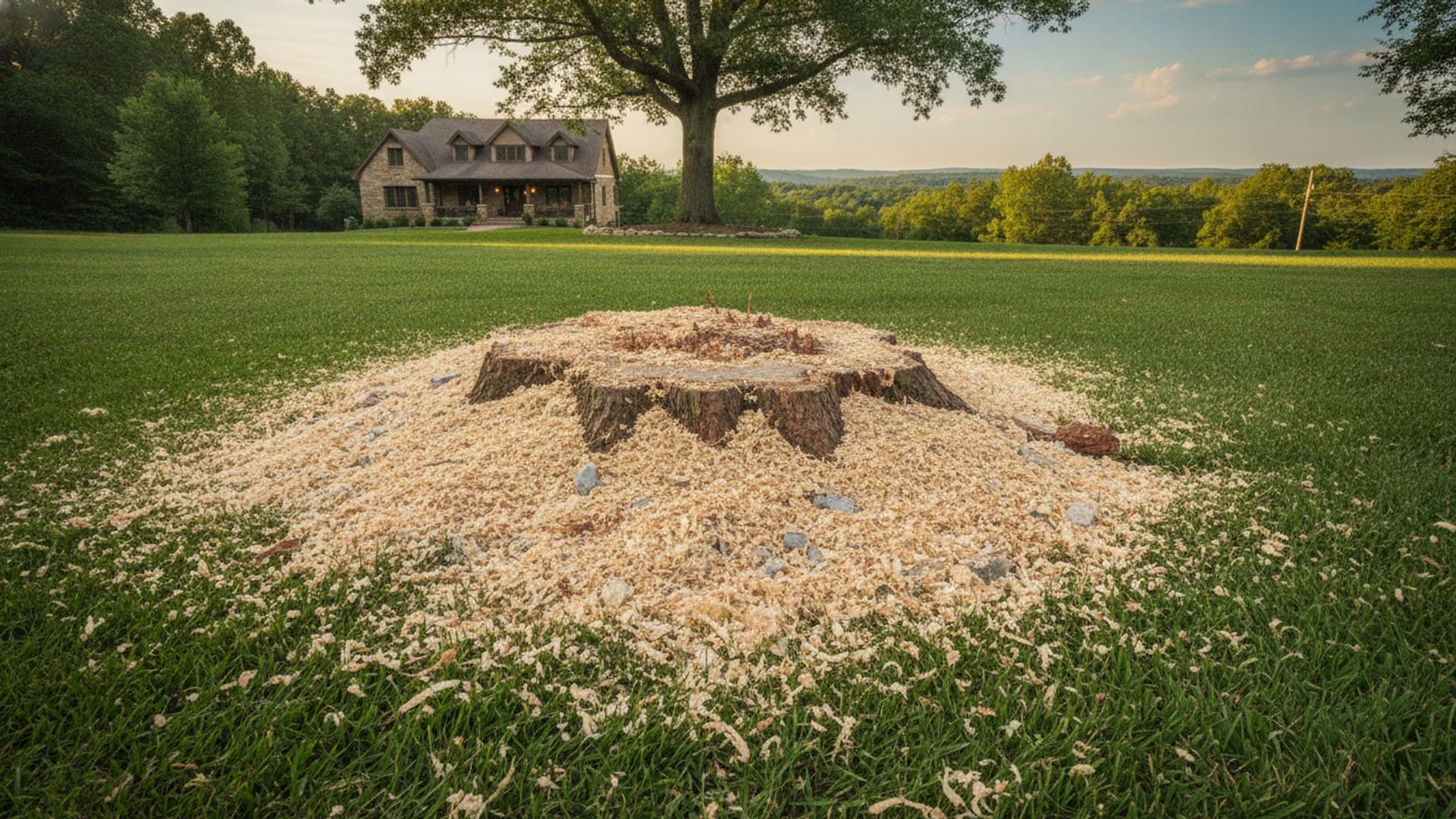
The stump you steer the mower around every week has a backstory — an ash the emerald ash borer killed, a takedown after one of the big spring blows, or a removal where the crew quoted grinding as "extra" and you passed. Springfield yards are carrying a backlog of exactly these, and most get dealt with the same way: one visit of stump grinding in Springfield, MO turns a shin-high tripping hazard into a patch of ground you can seed and mow like the tree was never there. SGF Tree Removal handles stump grinding and full stump removal quotes for homes and businesses across Springfield, Greene County, and roughly 30 miles around, and every job starts with a free written estimate.
Grinding vs. Full Stump Removal: What Each One Actually Leaves
Half the people searching for stump removal in Springfield, MO actually want what grinding delivers, so here's the honest mechanics of each. Grinding cuts the stump down 6 to 12 inches below grade — deep enough to lay sod, seed grass, or run a mower over without ever knowing it was there. The lateral roots stay in the soil and decay naturally over the following years, and the hole gets backfilled with the chips the grinder produces. Full removal is a different animal: an excavator digs out the entire root ball, at several times the cost, with real destruction to the surrounding lawn. It earns its price in exactly one situation — you're pouring a slab, building, or replanting in that precise spot. And when a property has a dozen stumps instead of one — a build site, an overgrown acreage — that's really a land clearing conversation, priced and equipped differently than yard-by-yard grinding.
Springfield Ground Is Hard on a Grinder
Springfield sits on thin, cherty silt loam over karst limestone, and that shapes stump work in two ways worth saying plainly. First, chert fragments and shallow rock dull carbide grinder teeth and slow the cut — part of why per-stump pricing here isn't identical to deep-soil markets. Second, trees rooted in shallow soil grow wide, flat root systems, so surface roots often run well past the stump and get taken down pass by pass rather than in one bite. The karst adds a consideration nobody talks about: on some of Missouri's densest sinkhole terrain — the cave-and-sinkhole ground around Doling, the bluffs along Galloway Creek — a stump near a mapped sinkhole or an active drainage way deserves a look before the machine shows up, and an honest estimate flags it up front instead of mid-job. The old-canopy neighborhoods — Rountree, Phelps Grove, University Heights — add big-diameter legacy stumps on small lots with tight gates, where an 811 locate before grinding near buried utilities is simply the standard.
After the Grind: Chips, Settling, and Getting Grass Back
A ground stump produces a startling mound of chips — often two to three times the stump's visible bulk, because the grinder is pulverizing wood that was below ground too. You have three options: leave the grindings as backfill, spread them as mulch in beds elsewhere, or have them hauled. If they backfill the hole, expect the spot to settle for a season or two as the chips break down, and plan to top it up. And one piece of agronomy every homeowner learns the hard way: decomposing wood ties up nitrogen, so grass seeded straight into grindings comes in thin and yellow. The sequence that works is rake out the bulk, backfill with topsoil, then seed. Simple — but nobody tells you until the bare patch is a year old.
Why Shoots Keep Growing Back After a Stump Is Ground
If your tree stump shoots keep growing back months after a grind, the grinder almost certainly didn't miss — you're watching root biology. Grinding takes out the stump; the live lateral roots stay, and Springfield's three most notorious sucker species are exactly the trees people have spent the last decade cutting down here: Callery pear (the failing Bradford of every 1990s subdivision), silver maple (the overmature mid-century yard tree), and hackberry. Live roots hold stored energy and push up suckers for a season or more, sometimes yards from the original stump. A below-grade grind stops regrowth from the stump itself; scattered root suckers get mowed or cut until the roots run out of reserves, usually within a couple of seasons. The reassuring flip side: oaks and most conifers rarely resprout at all. Ground once, they're done.
Old Stumps, Termites, and Carpenter Ants
Letting a stump rot isn't a neutral choice, especially within reach of the house. Softening wood is habitat: subterranean termites and carpenter ants colonize decaying stumps, and a rotting stump 15 feet from a foundation, deck post, or woodpile is an invitation with a return address. The emerald ash borer wave makes this current — EAB was confirmed in Greene County in 2018, and borer-killed ash goes brittle and soft faster than most species, which means the ash stumps scattered across mid-century Springfield neighborhoods are exactly the wood pests find first. Grinding the stump out removes the harborage entirely.
What Stump Grinding Costs in Springfield
Stump grinding cost follows four factors: stump diameter (grinding is commonly quoted per inch, measured at the ground across the root flare), how many stumps (multi-stump discounts are standard), access (gates, slopes, backyard runs), and ground conditions — rocky, chert-heavy soil cuts slower and eats teeth, which is a real Springfield line item, not an excuse. As market context: grinding is commonly priced around $2 to $5 per inch of diameter with a minimum call-out in the $100 to $200 range, and local listings put typical single residential stumps around $100 to $450, with big legacy hardwoods above that. Full dig-out removal runs roughly two to five times the grinding price. The full breakdown lives in our stump grinding cost guide; the only number we stand behind for your yard is a free written estimate.
Scheduling Stump Work Around Springfield
Stump calls stack up in late spring for a reason: winter and storm-season takedowns leave stumps behind, and the first month of mowing turns every one of them into a weekly annoyance. Stump grinding is scheduled work — we book it, walk the ground, and put the price in writing first. We handle stumps across Springfield, Greene County, and about 30 miles around, from tight city lots to acreage properties down in Ozark, residential and commercial alike. Still have the whole tree standing over the stump-to-be? Start with tree removal and price the grind as part of the same visit. When you're ready, Get a Free Estimate or call (417) 742-8635 — phones are answered around the clock.