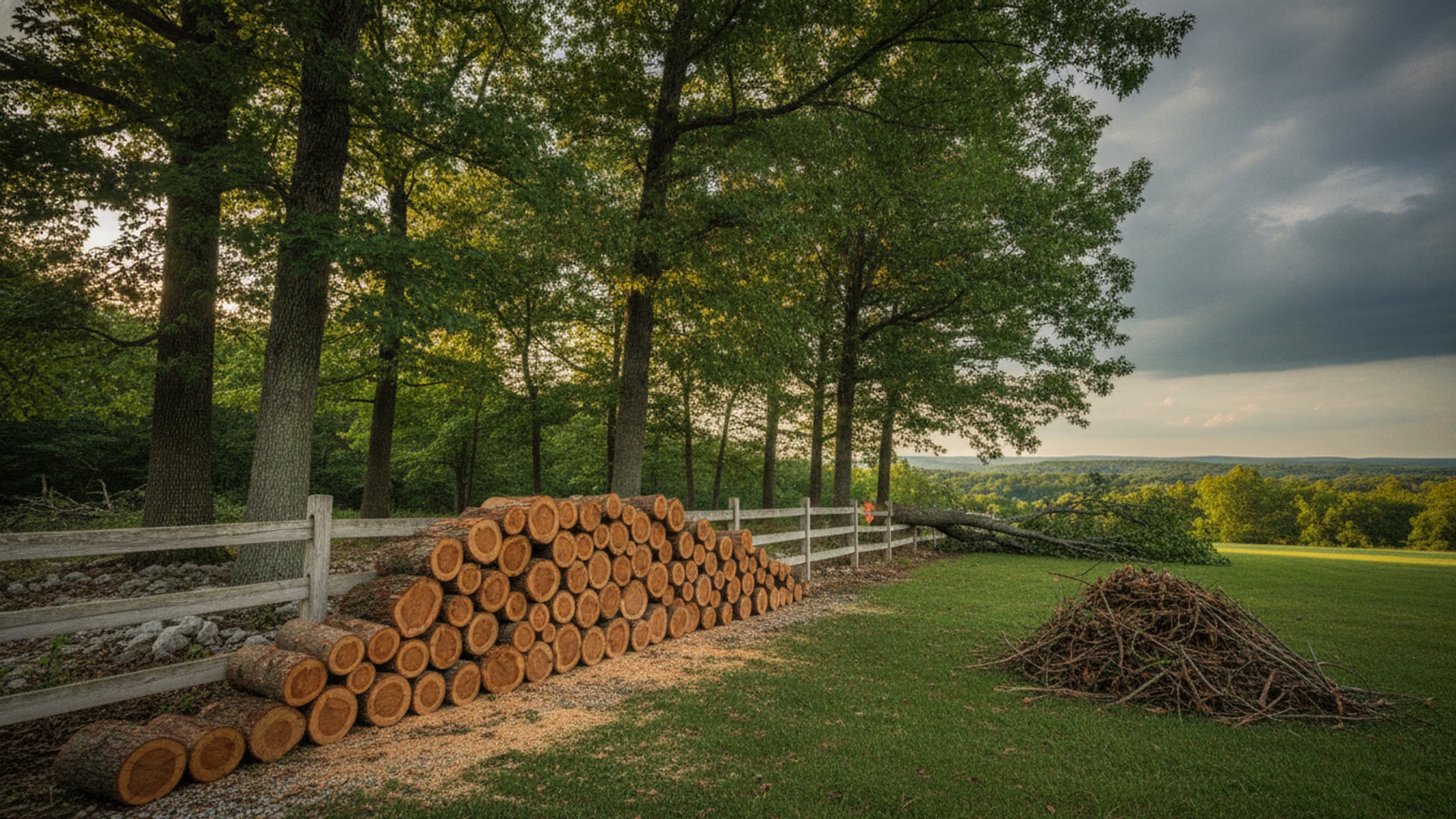
The wind died down an hour ago, and now there's an oak limb on the roof — or the whole trunk is across the driveway and you're supposed to be at work by 8. Call SGF Tree Removal at (417) 742-8635. The line is open 24 hours, 7 days a week, with 24/7 storm damage and fallen tree response for homes and businesses across Springfield and the surrounding Greene County area. This page walks through emergency tree removal in Springfield, MO the way it actually unfolds: what counts as an emergency, what to do before anyone touches the tree, and how the work runs from the first call to the last load of debris.
Is it an emergency, or can it wait until morning?
Four situations get a call right now:
- A tree or limb on a structure. If a tree fell on your house in Springfield, MO — or a branch went through the porch roof, the garage, or the fence — that's the front of the line. The wood is still loading the structure, and the damage keeps growing until the weight comes off.
- Blocked access. A trunk across the driveway, a car pinned in the garage, a gate or private drive you can't get through. You shouldn't have to cancel your morning because of last night's wind.
- A new lean. If a tree is leaning in a way it wasn't yesterday — especially with cracked or mounded soil at the base — the root plate has moved, and trees that start going over rarely re-anchor. Keep everyone out of the fall zone, which is roughly the tree's full height in the direction of the lean.
- A hung broken limb. A branch hanging after storm winds — snapped but caught in the crown over a roof, a driveway, or the swing set — will come down. The only questions are when, and onto what.
Here's the honest flip side: a standing dead tree that isn't threatening anything is urgent but schedulable. That's regular tree removal, and planned work is usually cheaper than a night call. If you're not sure whether a tree is failing or just tired, our guide on how to tell if a tree is dying covers the signs — catching a hollow silver maple or a borer-killed ash in October beats meeting it in your kitchen in April. Not sure which lane you're in? Call (417) 742-8635 and describe it, and we'll tell you straight.
Before anyone touches that tree
Two safety rules matter more than anything else on this page.
If the tree or limb is touching a power line — or pulled a line down — call City Utilities of Springfield first, before any tree company, including us. No tree crew works an energized line. The utility de-energizes it, and then the tree work starts. If you're outside CU territory, it's your local electric co-op. Treat every downed line as live, even a silent one lying in wet grass.
Second: stay off the storm wood. Stay out from under a new lean, and off the far side of anything down. Storm-broken trunks and limbs are loaded under tension like springs — cut one in the wrong place and it releases without warning, which is exactly how barber-chair injuries happen. Storm wood is the most dangerous wood there is; it is not the weekend to learn chainsaw work. Keep people, pets, and cars out of the fall zone, don't climb on anything the tree is resting on, and call (417) 742-8635 to tell us what you're looking at.
What happens when you call
On the phone we ask three things: what happened, what the tree is on, and whether anyone is in danger. That's enough to triage honestly — trees on houses and blocked driveways come ahead of yard cleanup, and we'll tell you where your situation lands.
Storm damage tree removal in Springfield, MO runs in two phases. Make-safe comes first: the weight comes off the structure, the access route gets cleared, the hung limb comes down, and the property is left stable and tarp-able. Full removal and cleanup come after the hazard is gone — the remaining trunk sections, debris hauling, and the stump conversation, with a free estimate on everything that isn't urgent. Get a Free Estimate for that second phase; the first phase is about stopping the damage.
One thing worth saying plainly: 24 hour tree service in Springfield, MO means the line is answered around the clock — you call when the tree comes down, not when business hours resume.
Photos before chainsaws — the insurance part
If the tree hit something, slow down for five minutes before cleanup starts. Homeowners insurance typically covers tree removal when the tree fell on a covered structure — house, garage, fence. That's usually the insurable event. Preventive removal of a standing tree is typically out of pocket. Every policy differs, so check yours — this is general guidance, not a coverage promise.
What helps a claim: photos from several angles before any wood moves, taken from the ground and only where it's safe, plus itemized documentation of the work. We separate make-safe, removal, and cleanup into distinct line items so your adjuster sees exactly what was emergency stabilization and what was cleanup — and we work around whatever documentation your adjuster asks for.
Springfield's storm record
Emergencies here aren't hypothetical — Springfield's calendar produces them on schedule.
On April 29, 2025, a storm cluster pushed a 91-mph gust through the Springfield airport, put trees onto homes and power poles, cut power to roughly 50,000 City Utilities customers, and forced a civil-emergency declaration — CU's worst outage since 2007, with tree and line crews working for days. The benchmark before that was the January 12–14, 2007 ice storm: up to about two inches of glaze, roughly 75,000 CU customers dark, 330 poles replaced, and $40 million in public-infrastructure damage across Greene County, with outages that ran for weeks.
The calendar is consistent — tornado and straight-line-wind season runs March through May, and the ice window is December and January. The failures have local causes, too. Thin, cherty soil over Ozarks karst limits rooting depth, so a saturated week plus one hard gust tips big oaks and maples over whole, root plate and all. Bradford and Callery pears split at their weak branch unions in nearly every windstorm. And ash trees killed by emerald ash borer turn brittle fast, shedding limbs long before the trunk finally goes.
After the storm, watch the driveway
Big wind events pull out-of-town crews into Springfield neighborhoods within a day or two — door-knockers with cash-up-front deals, no local number, gone by the weekend. The sensible rules apply to anyone you hire, including us: get a written price before work starts, don't pay cash up front, and call a number that will still answer next month. Ours is (417) 742-8635, day or night, before and after the storm.
One number for Springfield and the towns around it
We're based in Springfield and serve Greene County and roughly 30 miles out — storms don't stop at the city line, and the same systems that rake Springfield hit Marshfield up the interstate and Battlefield on the city's southwest shoulder. Residential or commercial, the fork is simple: if it's on the house, across the driveway, or hanging over something people use, call (417) 742-8635 now. If it can wait until morning, Get a Free Estimate and we'll plan it properly — and everything else we do, from removals to stump grinding, is on the main site.