An ash that never leafed out this spring. A Bradford pear that dropped half of itself in the last thunderstorm and left the other half hanging. A white oak that seems to lean a little closer to the roofline after every front. If one of those is standing in your yard, you've moved past tree care and into tree removal in Springfield, Missouri — a job that's really a rigging problem, solved one measured section at a time. We handle hazardous tree removal, dead and storm-damaged trees, and large removals for homes and businesses across Springfield and roughly 30 miles in every direction through Greene County and the surrounding towns, with a free written estimate before any work starts.
Why Springfield Trees Come Down
This region schedules more removals by weather than by choice. On April 29, 2025, a storm cluster pushed a 91-mph gust through Springfield's airport, put trees onto homes and power poles, and left around 50,000 City Utilities customers in the dark — the utility's worst outage since the January 2007 ice storm, and bad enough for a civil-emergency declaration. That 2007 storm is still the local benchmark: roughly two inches of glaze, about 75,000 City Utilities customers without power, 330 poles replaced, and $40 million in damage across Greene County.
Two slower forces do the rest. Emerald ash borer was confirmed in Greene County in 2018 — the city inventoried its ~380 right-of-way ash trees in response — and a private ash typically dies within a few years of infestation, then turns brittle where it stands. And underneath everything sits the Ozarks' karst: thin, cherty soil over dissolving limestone, some of Missouri's densest sinkhole ground. Shallow root plates are the norm here, which is why saturated spring soil plus straight-line wind tips whole trees. If you're not sure which category your tree falls into, start with how to tell if a tree is dying.
What Your Tree Is Telling You
Most removal calls start with a symptom, not a species name. Here's how the common ones translate:
| What you're seeing | What it usually is | What happens next | |---|---|---| | Ash with a thinning crown, woodpecker flecking, bark falling away | Emerald ash borer kill | Removal — a dead ash gets more brittle and more expensive every season it stands | | Tree leaning toward the house, soil cracked or mounded at the base | Root-plate movement in shallow karst soil | Urgent assessment — a moved root plate rarely re-anchors | | Bradford or Callery pear split at the trunk union | Included bark — the classic Springfield windstorm failure | Removal; MDC's pear buyback even trades a free native tree for every pear cut down | | Mushrooms or shelf fungus at the base of the trunk | Advanced root or butt decay | Assessment first — decay you can see outside is usually worse inside | | Limb torn out or trunk split in a storm | Storm damage | Often emergency work, handled any hour |
Dead tree removal in Springfield, MO deserves its own note: brittle wood can't be climbed and rigged the way live wood can, so a standing dead tree isn't a problem that holds its price while you wait. It gets more dangerous and more expensive on the same schedule.
How a Tree Removal Actually Works
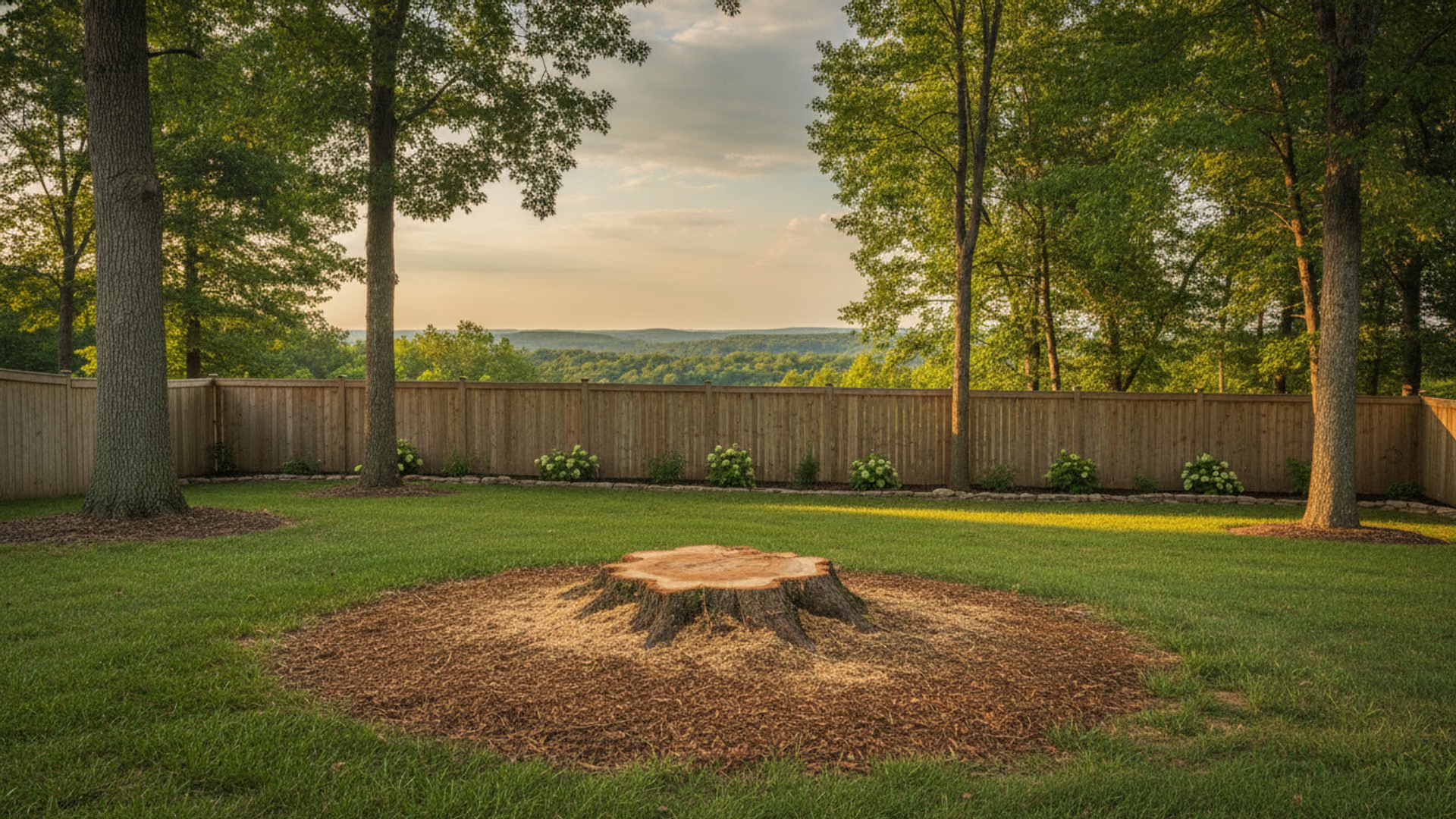
Nobody in this market explains the job, so here it is. First, call (417) 742-8635 any hour — or request a free estimate online — and describe the tree: what it's doing, what's under it, how long it's looked this way. Second, we do a walk-around hazard assessment on site: the lean, the root plate, decay at the base, deadwood in the crown, and the targets — roof, service lines, fence, play area — plus how equipment gets in. Third, you get a free written estimate before anything happens; the number covers the tree you actually have, not a phone guess. Fourth, the removal itself: climbing or bucket work from the top down, the tree dismantled piece by piece, with rigging and controlled lowering over anything that matters — no limb free-falls over a roof or line. Finally, cleanup: limbs through the chipper, trunk wood bucked and hauled, lawn raked. The stump is a separate decision and a separate line item — stump grinding takes it below grade so you can plant grass over the spot.
Tree Removal Cost in Springfield, MO
Four levers move the price of every removal: height, trunk diameter, access, and what's underneath. A tall trunk means more picks; a fat trunk means heavier wood per pick; a fenced backyard on a small Rountree lot means everything gets carried instead of driven; and a canopy over a roof or service line means slow rigging or a crane. Condition matters too — a borer-killed ash takes more care than live wood of the same size.
Here's what the Springfield-area market typically charges, as market data rather than anyone's quote:
| Tree size | Typical market range | |---|---| | Small (under 30 ft) | $300–$700 | | Medium (30–60 ft) | $600–$1,200 | | Large (60–80 ft) | $1,200–$2,500 | | Very large / over-structure or crane work (80 ft+) | $3,000–$5,000+ |
Stump grinding is priced separately on top of those figures. One piece of consumer advice worth more than any table: a bid far below market usually means no insurance behind it — ask any bidder for certificates before they start a saw. For the full breakdown of what moves the number, read the tree removal cost guide. Every job here starts with a free written estimate.
When Crane Removal Makes Sense
Large tree removal in Springfield, MO often means a century oak filling an entire lot in Phelps Grove or University Heights — house on one side, lines on another, the neighbor's garage inside the fall zone. Crane tree removal is the answer when there's no safe way to climb and rig: the tree is too tall for the drop zone, too brittle to hold a climber (a dead ash again), or too boxed-in to lower wood through. The mechanics are straightforward — each section is cabled to the crane, cut free, and lifted up and out over the roof instead of being lowered through the canopy. Crane time is exactly why over-structure removals sit at the top of the cost table, and it's still cheaper than a hole in the roof.
24/7 Storm Damage and Fallen Tree Response
The phone is answered 24 hours a day, 7 days a week, and 24/7 storm damage and fallen tree response is part of the job in a town with Springfield's storm record. A tree on the house, a trunk across the driveway, a half-failed leaner after a wind event — that work runs through our dedicated emergency tree service. One boundary first, always: if a tree or limb is touching a power line, your first call is City Utilities of Springfield, not a tree company. Once the line is safe, we handle everything from the service drop down.
Tree Removal Across the Springfield Area
Our crews work across Springfield — the century-old oak canopy over small lots in Rountree, Phelps Grove, and University Heights; the overmature silver maples and hackberries tangled in service drops across Midtown; creek-bank leaners along Galloway Village; and the shallow-rooted windthrow ground around Doling's sinkhole terrain. From that Springfield base, the same work runs about 30 miles in every direction: Nixa, Ozark, Republic, Battlefield, Marshfield, and Bolivar all sit inside the everyday service area, from Christian County subdivisions full of splitting builder-planted pears to fencerow oaks on Webster and Polk County acreage.
Get a Written Number on the Tree
Whether it's one dead ash over a patio or a commercial lot with a dozen storm-damaged trees, the next step is the same — and if a trim would solve the problem for a fraction of the cost, that's what the estimate will say. We offer the full range of tree services in Springfield and the surrounding towns, but removal is the work this site is named for. Call (417) 742-8635 any hour, any day, or get a free estimate online, and put a written price on the tree instead of another season of watching it lean.